

Bodmando Consulting Group

Mid-Term Review of Uganda’s NTD Sustainability Plan by RTI International

Case Study of a Mid-Term Review of Uganda’s NTD Sustainability Plan Mid-Term Review of the Ugandan Ministry of Health’s NTD Sustainability Plan 2020-2025, conducted in partnership with RTI International. Client Name RTI International Country Uganda Technical Area Global Health Year 2024 CASE STUDY MTR-NTD-SP-2024 What was the client’s problem? RTI International, in support of the Ugandan Ministry of Health, contracted the services of Bodmando Consulting Group to conduct a mid-term review of the NTD Sustainability Plan 2020-2025 for the NTD control program. The objectives of the mid-term review were to: Measure progress made against each functional area as outlined in the Sustainability Plan 2020-2025. Evaluate the strategy and sustainability priority actions to determine whether they still align with the existing needs and context. Re-prioritize government approaches based on the need to fast-track the expected outputs of the sustainability plan to consolidate and accelerate the gains achieved in NTD control and elimination. The mid-term review also sought to create opportunities to review and share progress towards sustainability at national and local government levels with relevant sectors, implementing partners, and other stakeholders. CASE STUDY MTR-NTD-SP-2024 What Approach and Methodology did Bodmando Undertake? The mid-term review was conducted in a highly participatory and consultative manner through the engagement of NTD program partners, district health team representatives, the World Health Organization (WHO), and relevant line ministries, such as the Ministry of Water and Environment, among others. It employed a mixed-methods approach to triangulate information across different sources, considering both primary and secondary data sources. Primary data was generated through: An NTD stakeholder consultation workshop. 15 Key Informant Interviews (KIIs). Ad-hoc meetings and calls with various NTD stakeholders. Secondary data was generated from a desk review of relevant NTD indicators in the District Health Information System 2 (DHIS2) and other NTD program documents. An NTD programme manager at the Ugandan Ministry of Health makes his contribution during the validation workshop of findings from the mid term review of the NTD Sustainability Plan 2020-2025 for the NTD Control Programme CASE STUDY MTR-NTD-SP-2024 What value did bodmando unlock? The mid-term review provided an in-depth analysis of the progress made within each functional area of the NTD Sustainability Plan 2020–2025. By evaluating the implementation strategies and priority actions, the review identified key challenges and gaps in service delivery, operational capacity, and coordination. Furthermore, it offered insights into lessons learned and provided actionable recommendations tailored to address these gaps. These recommendations helped re-align the program’s focus, ensuring that the control and elimination of Neglected Tropical Diseases (NTDs) remain on track. As a result, the review significantly contributed to Uganda’s ongoing efforts to reduce the burden of NTDs, while reinforcing sustainable, gender-inclusive, and locally-led approaches to achieve long-term success and resilience in the fight against these diseases.

Mid-Term Evaluation of the BMZ-SSF Project in Uganda by Awo International

Mid- Term Evaluation of the BMZ-SSF Project Mid-Term Evaluation of the BMZ-SSF Funded ‘Integration, Food Safety, and Nutrition’ Project in Uganda, implemented by AWO International Client Name AWO International Country Uganda Technical Area livelihoods Year 2024 CASE STUDY BMZ-SSF-UG-ME-2024 What was the client’s problem? AWO International, in partnership with four local organizations, implemented the BMZ-SSF funded project “Integration, Food Safety, and Nutrition” to improve living conditions and promote self-reliance among disadvantaged groups in Uganda. To assess the project’s progress and relevance, AWO International contracted Bodmando Consulting Group to conduct a mid-term evaluation of the BMZ-SSF Project. The objectives of the evaluation were to: Evaluate the project’s performance against the desired results as articulated in the project’s logical frameworks. Evaluate the project’s performance against Uganda’s current development strategies. Evaluate the project’s performance against the donor’s feedback, policies, and SSF requirements. Assess the extent to which the project interventions are addressing cross-cutting issues, such as gender equality, social inclusion, and disability. Provide AWO International with a sound basis for the development of the new project concept for 2026–2028. CASE STUDY BMZ-SSF-UG-ME-2024 What Approach and Methodology did Bodmando Undertake? The evaluation was cross-sectional by design and utilized mixed methods, relying on both primary and secondary data sources to gather information. It targeted the wider population in the refugee and host communities, as well as key partners and other stakeholders. Primary data was generated through: Key Informant Interviews (KIIs) with the Office of the Prime Minister (OPM), UNHCR, and BMZ partners. Focus Group Discussions (FGDs) with relevant stakeholders. A community survey with refugees and host communities. Additionally, a case study approach was employed as part of the evaluation design, allowing the evaluation team to observe, analyze, and assess the effects of the project on the welfare of refugees and host communities. Secondary data was generated through a desk review of relevant internal and external documents. CASE STUDY BMZ-SSF-UG-ME-2024 What value did bodmando unlock? Bodmando’s value lies in its role in conducting the mid-term evaluation of AWO International’s project. This evaluation provided critical insights into the project’s progress, effectiveness, and areas for improvement. By identifying challenges and successes, Bodmando contributed to refining the project’s implementation strategy, ensuring that initiatives in livelihood development, sustainable agriculture, family planning, and climate change adaptation remain impactful and aligned with the community’s needs.

Baseline Evaluation of the Bloom Project in Uganda

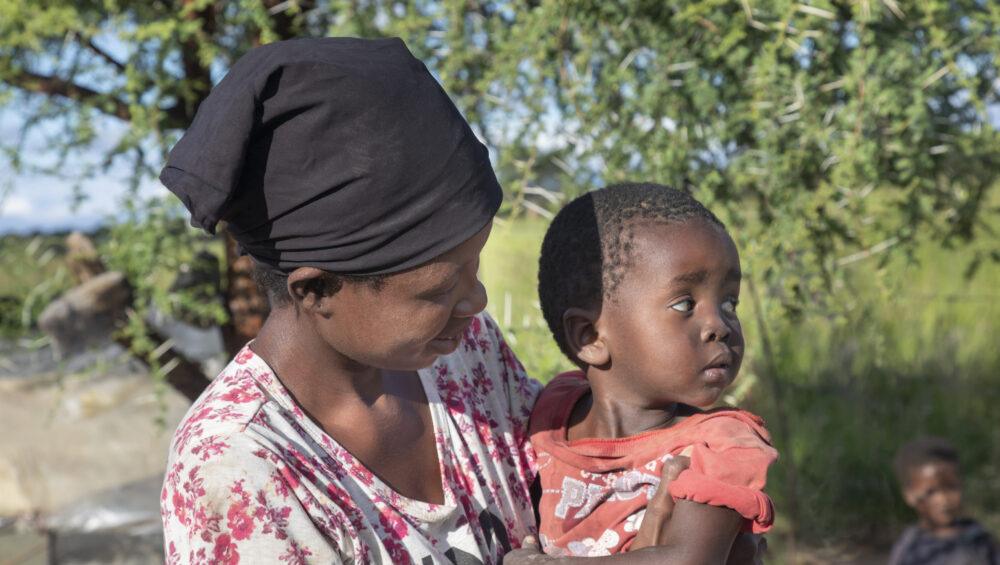
BASELINE EVALUATION OF THE BLOOM PROJECT IN UGANDA The Bloom Project aims to create a healthy life for children exposed to HIV and their young mothers living with HIV in Uganda. The project is implemented by community-based partners across five districts: Led by Aidsfonds, this initiative focuses on improving the access and quality of HIV care and support services, addressing barriers, and empowering young mothers and children living with HIV​. Client Name Aidsfonds – Soa Aids Nederland Country Uganda Technical Area Global Health Year 2023 CASE STUDY BLOOM-UGA-BE-2023 What was the client’s problem? Aidsfonds sought the services of Bodmando Consulting Group to carry out a baseline evaluation of the Bloom project. The main goals of the baseline assessment were; To determine key baseline indicators and benchmark data and to collect general benchmark information about young mothers living with HIV and their children, the demand for and access to PMTCT/HIV treatment and care services, and the indicators formulated for the Bloom project. To provide general benchmark information on the current situation regarding existing government policy/guidelines on young mothers, uptake of (informal) health services at community and facility level, retention rates, and PMTCT/paediatric HIV care. Understand the facilitators and barriers of young mothers and their children in enrolment for eMTCT, HIV care, support and treatment services in the targeted areas. This includes analyzing PMTCT demand and uptake by young mothers living with HIV and creating an understanding of this process and its barriers. Understand the facilitators and barriers faced by young mothers living with HIV and their children in access, utilization and retention in paediatric HIV care in the targeted areas at family, community, and health facility levels. This includes the uptake of informal health services at community and health facility level and the availability of child-friendly services for children living with HIV, the availability of paediatric HIV interventions by government and any other Non-Government Organizations (NGOs). CASE STUDY BLOOM-UGA-BE-2023 What Approach and Methodology did Bodmando Undertake? The baseline evaluation adopted a comprehensive, mixed-methods approach, combining both qualitative and quantitative research methods to gain a deep understaanding of the context and challenges faced by young mothers living with HIV. Key components of the approach included:   To determine key baseline indicators and benchmark data and to collect general benchmark information about young mothers living with HIV and their children, the demand for and access to PMTCT/HIV treatment and care services, and the indicators formulated for the Bloom project. To provide general benchmark information on the current situation regarding existing government policy/guidelines on young mothers, uptake of (informal) health services at community and facility level, retention rates, and PMTCT/paediatric HIV care. Understand the facilitators and barriers of young mothers and their children in enrolment for eMTCT, HIV care, support and treatment services in the targeted areas. This includes analyzing PMTCT demand and uptake by young mothers living with HIV and creating an understanding of this process and its barriers. Understand the facilitators and barriers faced by young mothers living with HIV and their children in access, utilization and retention in paediatric HIV care in the targeted areas at family, community, and health facility levels. This includes the uptake of informal health services at community and health facility level and the availability of child-friendly services for children living with HIV, the availability of paediatric HIV interventions by government and any other Non-Government Organizations (NGOs). CASE STUDY BLOOM-UGA-BE-2023 What value did bodmando unlock? The baseline evaluation of the Bloom Project provided crucial insights that shaped the project’s strategic implementation. By identifying key gaps in HIV service delivery, such as inadequate youth-friendly services and poor integration with maternal and child health, the evaluation enabled targeted improvements. It addressed social and cultural barriers like stigma and gender inequality, informing community-based interventions that empower young mothers. Additionally, the evaluation established baseline data for future impact measurement, ensuring ongoing refinement and effectiveness of the Bloom Project’s interventions. Through a participatory approach, the evaluation empowered the target population, fostering trust and engagement between the project team and the community Figure showing participants in a validation workshop for the baseline evaluation findings of the Bloom HIV/AIDS project in Uganda. CASE STUDY BLOOM-UGA-BE-2023 What value did bodmando unlock? The baseline evaluation of the Bloom Project provided crucial insights that shaped the project’s strategic implementation. By identifying key gaps in HIV service delivery, such as inadequate youth-friendly services and poor integration with maternal and child health, the evaluation enabled targeted improvements. It addressed social and cultural barriers like stigma and gender inequality, informing community-based interventions that empower young mothers. Additionally, the evaluation established baseline data for future impact measurement, ensuring ongoing refinement and effectiveness of the Bloom Project’s interventions. Through a participatory approach, the evaluation empowered the target population, fostering trust and engagement between the project team and the community